Executive Summary
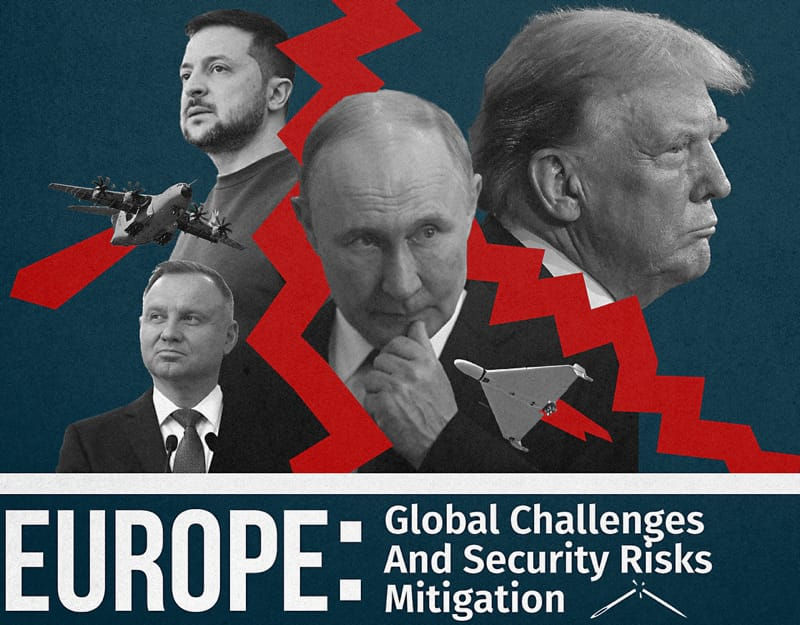
Prepared by a group of Russian political analysts organized by the Congress of People's Deputies, this report is presented as discussion material at the 34th Economic Forum “Time of Transition – What Future for Europe?” in Karpacz, Poland.
It analyzes the collapse of the Yalta–Potsdam system and its consequences for global security, with a particular focus on Europe’s readiness to adapt to new threats. It identifies Russia under Vladimir Putin as a catalyst of global instability, explores the decisive role of the Russia–Ukraine war, and assesses risks of uncontrolled escalation including the possibility of a Third World War.
The risks of further fascist- and totalitarian-style consolidation of Russian society — including the intensification of militarism, propaganda, and oppression — exacerbate global instability, potentially leading to the full ideological indoctrination of the population and a corresponding surge in external aggression. This challenge calls for institutionalized monitoring, systematic analysis, and targeted countermeasures against Russia’s propaganda apparatus and soft-power structures.
Moreover, Russian interference in European politics — including influence operations during elections in Moldova and Poland — underscores the urgent need to strengthen counterintelligence and tighten the regulation of foreign investments. Should the war in Ukraine end on unacceptable terms, additional socio-psychological risks would emerge: collective trauma, increased migration flows, and a profound erosion of public trust in both the EU and NATO.
A central theme is the shifting role of the United States in NATO and the growing uncertainty around the credibility of Article 5. This uncertainty forces Europe to assume more responsibility, especially through regional alliances on the Eastern flank, where Poland emerges as the indisputable leader. Poland’s political, economic, and military influence is examined across multiple subgroups, including the Visegrad Group, Poland–Baltic States, and the Poland–Ukraine–Lithuania triangle, with the potential inclusion of a democratic Belarus.
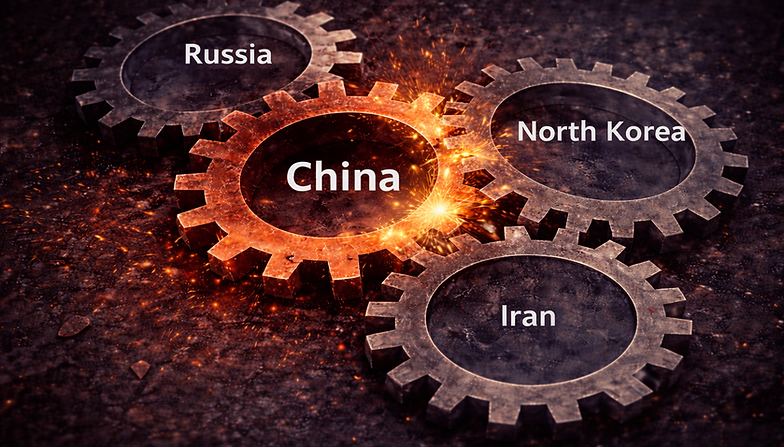
The report highlights Poland’s unique proactive strategy toward Russia: not limited to deterrence but aimed at building political alternatives to Putinism and providing a bridge for Russian elites to transition away from imperialism. This approach is contrasted with the Kremlin’s attempt to forge an “Unholy Alliance” with North Korea and Iran, supported by China, and to evolve BRICS into a potential anti-NATO bloc.
Ultimately, it concludes that Europe can become a global stabilizer if it embraces Poland’s model of leadership: strengthening regional coalitions, countering hybrid threats, engaging the Global South, and preparing for a multipolar but cooperative world order. Failure to do so would risk fragmentation, authoritarian advances, and potential escalation into global conflict.
1. Causes and Consequences of the Collapse of the Yalta–Potsdam System
The Yalta–Potsdam system, established in 1945, rested on the balance of power between victorious states and the institutionalization of global governance through the UN and collective security. Its gradual erosion was caused by the collapse of bipolarity after 1991, NATO’s expansion, and the absence of a new inclusive framework for Russia.
At the same time, the changing role of the United States in NATO has undermined predictability. Washington increasingly views European security as a burden, demanding more responsibility from Europe. This creates doubts about the credibility of Article 5, especially in crisis scenarios where U.S. domestic politics or isolationist tendencies might delay or prevent allied response.
The consequence is the rise of regional security sub-alliances within NATO, particularly on the Eastern flank. Here, Poland has emerged as an indisputable leader, consolidating formats such as the Visegrad Group, Poland–Baltic cooperation, and the Poland–Ukraine–Lithuania triangle (with potential future inclusion of a democratic Belarus).
Thus, the collapse of the Yalta–Potsdam system not only ended global stability but forced Europe into a phase where leadership within NATO is reconfigured. Poland is now positioned to shape strategies toward Russia—not limited to deterrence, but also to building political alternatives to Putinism and preparing bridges for a post-imperial Russia.
Scenario prerequisites and linkages
-
U.S. retrenchment from European security; ambiguity on Article 5 credibility.
-
Acceleration of regional security formats led by Poland on the Eastern flank.
-
Institutional paralysis at UN/OSCE, enabling revisionists.
-
Energy and defense-industrial dependencies unresolved in Western Europe.
To-Do suggestions
-
Embrace a proactive approach by Poland as the regional leader, develop a political strategy at the presidential level.
-
Support the post-Soviet integration into Western economic and security alliances, using Poland as the bridge and coordinating party.
2. The Putin Regime as a Catalyst of Global Turbulence
Putin’s regime thrives on crisis generation: wars in Georgia, Ukraine, Syria; cyberattacks on the West; interference in elections. By leveraging energy and hybrid tools, it destabilizes not just Europe but the global system.
The fascist drift of the regime is reflected in Putin’s so-called “anti-fascist” rhetoric, which in reality masks its own authoritarian traits — including a personality cult and militant nationalism. This trajectory risks evolving into full-scale totalitarianism under a militarized dictatorship. At the same time, Russian intelligence services fuel propaganda by accusing Europe of so-called “Euro-fascism,” thereby amplifying Moscow’s ideological offensive.
The decline of unquestioned U.S. military and democratic leadership magnifies these effects. Where once NATO deterrence rested on Washington’s umbrella, today European states must calculate that Article 5 might not automatically translate into U.S. action. This emboldens Moscow, which bets on Western hesitation.
Against this backdrop, Poland plays the role of a stabilizer and proactive agenda-setter. Its growing military capabilities, investment in defense, and regional leadership make it the center of Eastern Europe’s response to Russian destabilization. Importantly, Poland advocates not just containment but also a forward-looking Russia strategy: supporting alternative Russian elites, offering them a political bridge, and promoting a post-imperial vision for Russia integrated into a stable Europe.
Thus, while Putin acts as a catalyst of global turbulence, Poland increasingly positions itself as the antidote.
Scenario prerequisites and linkages
-
Sustained regime revenues (energy, sanctions evasion via BRICS).
-
Military replenishment through North Korea/Iran; Chinese economic cover.
-
Elite cohesion in Moscow; absence of credible political alternative.
-
The deepening of fascist tendencies in Russia, including the ideological indoctrination of youth and the enforcement of elite loyalty through militarism.
-
Western deterrence signals mixed or delayed.
To-Do suggestions
-
Promote the idea of a regime change in Russia as the only way to stop the ongoing and future aggression.
-
Develop pan-European campaigns aimed at exposing Russia’s ideological narratives as neo-fascist.
-
Develop a mechanism to allow Russian elites to switch sides in exchange for reintegration in the West.
-
Enable the Poland-based shadow pro-Western Russian government structures with development of an alternative for emergence of a democratic Russia.
-
Embrace Russian republics national-liberation movements as the pressure points inside the country.
3. The Impact of the Russia–Ukraine War on European and Global Security
The war in Ukraine is reshaping NATO and global security. Its outcome will determine whether international law is defended or whether aggression is normalized.
Here, the United States’ evolving role in NATO is decisive. European states can no longer assume Washington’s unlimited commitment; Article 5 may not be automatic. This creates space for regional security structures, with Poland as the backbone of support for Ukraine and the leader of Eastern flank defense.
Ending the war in Ukraine on unacceptable terms carries profound socio-psychological risks: collective trauma within Ukrainian society, the rise of radicalism, increased emigration, and growing social discontent. It also entails significant legal risks — freezing the aggression without a proper juridical settlement would undermine international law and jeopardize Europe’s security.
Poland’s influence manifests politically (EU and NATO advocacy for stronger Ukraine support), economically (hub for military logistics and energy diversification), and militarily (rapid modernization and force expansion). Through initiatives like the Poland–Ukraine–Lithuania triangle, Warsaw anchors strategies not only for Ukraine’s defense but also for shaping a future democratic Belarus and a post-imperial Russia.
A Ukrainian victory supported by Poland’s leadership would strengthen NATO’s credibility and European security. Conversely, a Russian win would expose the fragility of NATO and encourage authoritarian adventurism globally.
Scenario prerequisites and linkages
-
EU defense production ramp-up (ammo, air defense) or failure thereof.
-
Continuity or disruption of U.S. support; election outcomes.
-
Ukrainian state capacity and mobilization resilience.
-
Risks of psychological destabilization and a legal vacuum resulting from ending the war without guarantees of accountability for the aggressor.
-
Polish-led logistics and training networks scale up or stall.
To-Do suggestions
-
Support the work of an international tribunal on Russia’s aggression.
-
Organize a military technologies transfer using SAFE mechanism provided by EU, creating a military umbrella for the participating states.
-
Use Ukrainian military experience, with a possible involvement of war veterans to leverage new UAS/USV fighting practices to project strength and deterring the possible aggression.
-
Leverage the Russian and Belarussian armed resistance groups manpower and experience for the Polish and Baltic States military and political leadership.
-
Support the work of an international tribunal addressing Russia’s aggression.
4. Is a Third World War Inevitable?
World War III is not predetermined but the risk of escalation is rising. The erosion of trust in Article 5 makes it easier for revisionist powers to test NATO unity. Russia, China, and Iran may gamble that the United States will hesitate or that internal divisions will paralyze Europe. The fascist drift of the Russian Federation — through the internal normalization of totalitarian and militarist elements — increases the likelihood of escalation.
To mitigate risks, regional alliances must reinforce NATO’s credibility. On the Eastern flank, Poland coordinates closely with the Baltics, Romania, and Ukraine. This proactive approach creates deterrence by denial, signaling that aggression would meet immediate response regardless of U.S. hesitation.
Moreover, Poland’s Russia strategy goes beyond containment. By supporting anti-imperial political alternatives inside Russia, Warsaw reduces the likelihood of escalation by undermining the Kremlin’s legitimacy from within. This dual strategy—deterrence plus proactive engagement—makes World War III avoidable if applied consistently.
Scenario prerequisites and linkages
-
Lack of deconfliction channels and arms-control guardrails.
-
Escalatory doctrine in Moscow; nuclear signaling.
-
The intensification of totalitarian tendencies in Russia as a catalyst for global conflict.
-
Simultaneous crises (e.g., Baltic incident + Middle East war).
-
Eastern flank readiness under Poland either credible or hollow.
To-Do suggestions
-
Establish an anticrisis analytical center to study the threats and make policy suggestions.
-
Exert pressure on Russia’s internal situation by supporting human rights initiatives and programs that undermine the country’s totalitarian drift, while fostering the emergence of anti-totalitarian activists who feel protected by the West.
-
Engage transatlantic policymakers and business elites for Washington and Brussels based advocacy efforts to promote vision of existing threats and their mitigation.
5. A New World Security System: Steps Toward Multipolarity
As U.S. hegemony wanes, multipolarity becomes inevitable. Yet without credible European leadership, multipolarity risks degenerating into chaos.
A stable system requires Europe to step forward. But with doubts about U.S. commitment, the continent cannot rely solely on NATO’s U.S. backbone. Regional security clusters led by Poland become the building blocks of a new European security architecture.
Poland’s leadership in the Visegrad Group, Poland–Baltic cooperation, and the Poland–Ukraine–Lithuania (future Belarus) framework demonstrates how subregional coalitions can reinforce broader alliances. Their vision must also include a strategy toward Russia, preparing for political transition and offering incentives for elites to abandon imperialism.
This approach turns multipolarity from a threat into an opportunity: a system where proactive regional actors stabilize their neighborhoods while aligning with global democratic coalitions.
Scenario prerequisites and linkages
-
EU–NATO integration on planning/procurement; joint commands.
-
Growth of Poland-centered coalitions as building blocks of security.
-
Credible roadmap for post-imperial Russia engagement.
-
BRICS politicization and Global South alignment trends.
To-Do suggestions
-
Engage selected BRICS members into economic and military cooperation with Poland-centered regional alliance, incentivizing them to pivot away from Russia.
-
Focus on the areas that are endangered by BRICS growth, namely Taiwan, South Korea, Azerbaijan, Kazakhstan and others for the military cooperation.
6. The Potential Threat of an Iranian–Israeli Conflict
An Iranian–Israeli conflict would have global repercussions, from energy markets to security in Europe. Russia and China would likely exploit such a war to weaken Western cohesion.
Here, Europe’s vulnerability is compounded by doubts about U.S. reliability in NATO. If Washington prioritizes the Middle East or Asia, Europe might be left to defend itself. Thus, regional security frameworks become vital. Poland and its Eastern allies cannot directly influence the Middle East, but they can ensure Europe’s flank is secure, preventing Moscow from taking advantage of U.S. distraction.
Poland’s broader strategy toward Russia—supporting internal change, not just containment—becomes especially relevant in scenarios where multiple global crises unfold simultaneously.
Scenario prerequisites and linkages
-
Regional Middle East escalation that diverts U.S. attention.
-
Energy shock exposure in Europe not mitigated.
-
Russian exploitation via Syria/Caucasus theaters.
-
Poland/CEE backfill capability for NATO’s Eastern flank.
To-Do suggestions
-
Enforce military and economic cooperation with the neutral/unaligned Middle Eastern and North African states (for example Jordan, Bahrain, etc.), leveraging Ukrainian experience.
-
Deepen cooperation with countries that demonstrated military resilience (Israel, Azerbaijan) to include them in the Polish-led deterrence alliance.
7. The Rising Role of the Global South and Associated Risks
The Global South increasingly asserts itself in international politics, demanding greater influence in global governance. Many countries in Africa, Asia, and Latin America resent historical marginalization and economic inequality, perceiving Western double standards in international affairs. Russia and China exploit these sentiments by presenting themselves as champions of a “multipolar” order, free from Western dominance. Russia’s interference in European politics extends through proxies into the Global South, amplifying protest movements in the West and destabilizing electoral processes.
At the center of this effort is the Kremlin’s strategy to build an “Unholy Alliance.” Russia seeks to bind North Korea and Iran into its orbit, forming an axis of authoritarian states that destabilize multiple regions simultaneously. In this framework, China remains the shadow benefactor, providing economic depth and global reach while allowing Moscow to act as the spearhead of confrontation with the West.
Institutionally, Moscow pushes for the strengthening of BRICS as more than just an economic club. With the addition of new members from the Global South, the Kremlin envisions BRICS evolving into a global anti-Western economic bloc with the potential to mature into an anti-NATO political-military alliance. Such a transformation would give Russia a sense of strategic depth, linking conflicts in Europe, the Middle East, and Asia into a single anti-Western front.
For Europe, this poses multiple risks: fragmentation of global governance if BRICS evolves into a rival system; strategic overstretch as simultaneous crises erupt across regions; and erosion of Western unity if Global South countries align with the authoritarian bloc.
At the same time, the United States’ shifting role in NATO force Europe to prepare for scenarios where Washington’s commitment is diluted. This makes regional leadership crucial. Poland, through its alliances with the Baltics, Ukraine, and potentially a democratic Belarus, demonstrates how to counterbalance Moscow’s global maneuvering. Beyond deterrence, Poland promotes a vision of post-imperial Russia, offering Global South states an alternative narrative: one where stability comes from democratic, regional self-determination rather than authoritarian blocs.
Scenario prerequisites and linkages
-
Formal/informal knitting of Russia–North Korea–Iran with China’s backing.
-
BRICS enlargement into coordinated anti-Western economic bloc.
-
Debt and commodity leverage over Global South by the authoritarian axis.
-
EU/Polish outreach to Global South either succeeds or fails.
To-Do suggestions
-
Engage the democratic opposition of authoritarian Global South/”Unholy Alliance” states into cooperation with democratic Russian and Belorussian opposition, making Poland a platform for a global dialogue.
-
Engage Global South countries in joint programs to counter Russian interference, including the sharing of data on hybrid threats.
-
Establish a mechanism to support business and civil society projects with pro-Western actors in BRICS countries.
8. Europe’s Readiness to Become a Center of Stability
Europe aspires to be a pole of global stability, but U.S. retrenchment force it to assume greater responsibility. Without this, Europe risks irrelevance in multipolarity.
The Eastern flank, led by Poland, demonstrates what readiness looks like: military investment, political will, and coalition-building. Poland’s partnerships with Ukraine, the Baltics, and Visegrad countries show a model of proactive regional leadership. Crucially, its strategy toward Russia goes beyond deterrence, laying groundwork for political transition.
If replicated across Europe, this approach could allow the continent to emerge as a true stabilizer, no longer dependent on U.S. guarantees.
Scenario prerequisites and linkages
-
Defense spending at 5% of GDP with war-economy instruments.
-
Pan-European air/missile defense and ammunition commons.
-
Energy resilience (LNG, nuclear, renewables) and supply chains in CEE.
-
Political will to empower Poland-led regional commands.
To-Do suggestions
-
Develop and promote vision for the positive future of unaligned and Russia-aligned countries in cooperation with the EU.
-
Establish and publicly promote a permanent parliaments-based task force groups to cooperate with democratic forces in “Unholy Alliance” countries.
9. Building Mechanisms Against Hybrid Threats and Effective Counter-Propaganda
Hybrid warfare—cyberattacks, disinformation, energy blackmail—is now a daily reality. While NATO offers frameworks, U.S. attention is divided, and Article 5 is uncertain in the cyber domain.
Effective counteraction requires a four-tiered set of measures:
-
strengthening cybersecurity and overall digital resilience,
-
developing effective counterpropaganda and establishing a unified center for monitoring disinformation,
-
shaping a positive alternative narrative that makes the Western model attractive not only to domestic societies but also to partner states,
-
adopting additional legal regulations to safeguard against malicious foreign interference.
These measures must be coordinated at the EU and NATO level, yet regional leadership by Poland and its allies is of particular importance, as they stand on the front line of hybrid confrontation with Moscow.
Scenario prerequisites and linkages
-
The growing interference of Russia in European politics, including hybrid operations targeting elections in Central and Eastern Europe (Moldova, Romania, and others).
-
Platform cooperation with tech firms on content integrity.
-
National resilience programs (digital, civil defense, media literacy).
-
Offensive information ops exposing Kremlin networks.
-
Rapid attribution and joint sanctions mechanisms.
To-Do suggestions
-
Create a powerful media platform (TV holding) in Russian language to engage Russian-speaking diaspora into democratic and anti-imperialism initiatives.
-
Establish an EU center for countering foreign interference in politics, with a focus on blocking disinformation and monitoring party financing, accompanied by amendments to both EU-wide and national legislation.
-
Support Russian and Belorussian diaspora organizations in EU states under “Russian Europeans” umbrella.
10. Central and Eastern Europe: Passive Barrier or Active Stabilizers? The Role of Poland
Central and Eastern Europe have shifted from Europe’s periphery to its frontline. With doubts about U.S. reliability and Article 5, their agency has multiplied.
Poland is the undisputed leader of this transformation. Its influence is political (shaping NATO/EU debates, advocating for Ukraine, pushing enlargement eastward), economic (logistics hub, energy diversification, defense industry growth), and military (rapid buildup, becoming NATO’s largest land force in Europe).
Poland organizes multiple sub-alliances: the Visegrad group, the Poland–Baltic cluster, and the Poland–Ukraine–Lithuania triangle with potential inclusion of Belarus. Together, they constitute a strategic nucleus of NATO’s eastern flank.
Most importantly, Poland’s Russia strategy goes beyond containment: it envisions a bridge for Russian elites to defect from imperialism, building a political alternative to Putinism. This forward-looking vision transforms CEE from a passive buffer into an active stabilizer shaping Europe’s future.
Scenario prerequisites and linkages
-
Poland’s industrial base (artillery, AD, drones) reaches scale.
-
Interoperability and joint procurement across Baltics–Visegrad–Ukraine.
-
Sustained public consensus and elite cohesion in CEE.
-
Pathways for Belarusian democratic forces and Russian defectors.
To-Do suggestions
-
Create a roundtable between the known reformists of Poland, Baltic States and other former Warsaw bloc countries to create a roadmap of democratic transition and leverage the experience of achievements and failures.
11. Scenarios for the Future (2025–2035)
Below are four structured scenarios reflecting divergent pathways for European security. Each scenario lists key prerequisites/triggers, early-warning indicators, likely outcomes, and immediate actions to bias reality toward favorable trajectories. Scenarios are not predictions; they are decision-making tools.
Scenario 1 — Pessimistic: Ukraine defeated; Article 5 not honored; Russia as a regional hegemon
Synopsis:
Western support fragments; Ukraine is defeated. Russia swiftly coerces or tests a Baltic state. Article 5 is not honored in practice; NATO becomes a low-intensity coordination forum while European security splinters into bilateral pacts with Russia as the major and imminent threat.
Key prerequisites / triggers:
-
Collapse or sharp reduction of aid to Ukraine; EU production fails to scale.
-
U.S. retrenchment and political polarization deepen Article 5 ambiguity.
-
Authoritarian ‘Unholy Alliance’ sustains Russian war industry.
-
Energy/sanctions fatigue divides EU states.
Early-warning indicators:
-
Ukrainian lines collapse; regime change or imposed capitulation.
-
Hybrid coercion against Baltics/Poland (border closures, cyber, sabotage).
-
Emergency bilateral defense deals overshadow NATO processes.
-
Markets price in chronic risk; refugee flows expand.
Likely outcomes:
-
The deepening fascization of Russia and the socio-psychological trauma in Ukraine resulting from an end to the war on unacceptable terms.
-
De facto spheres of influence re-emerge; Russia dominates Eastern Europe.
-
NATO deterrence credibility collapses; arms races become fragmented.
-
Poland re-arms at maximum pace; political radicalization risk rises.
-
BRICS axis gains prestige across the Global South.
Recommended actions now:
-
Crash munitions and AD production with guaranteed procurement and subsidies.
-
Stand up an Eastern Flank Command under Polish leadership with prepositioned stocks.
-
Harden borders, energy grids, undersea assets; expand civil defense.
-
Global South diplomacy to blunt BRICS politicization and sanctions leakage.
Scenario 2 — Inertial: Unfair peace; rearmament; renewed war against Baltics possible
Synopsis:
A ceasefire freezes lines without justice or guarantees. Putin consolidates power, keeps forces mobilized, rebuilds capabilities, and later tests NATO in the Baltics—potentially without a significant pause.
Key prerequisites / triggers:
-
Pressure for ‘peace now’ outweighs conditions for a durable settlement.
-
Sanctions erosion; DPRK/Iran supply channels remain open.
-
Regime cohesion in Moscow; domestic repression intensifies.
-
Article 5 messaging remains cautious; deterrence ambiguous.
Early-warning indicators:
-
Russian force regeneration and doctrinal learning.
-
Surge in disinformation, sabotage, and political warfare in CEE.
-
Baltic incidents escalate from gray-zone to kinetic probes.
-
EU political fragmentation over normalization with Moscow.
Likely outcomes:
-
Partial replay of Ukraine dynamics; NATO response slow and compartmentalized.
-
CEE militarization accelerates under Polish leadership.
-
European energy and trade volatility persists.
-
Authoritarian bloc emboldened but not dominant.
-
A legal vacuum and psychological destabilization in Ukraine and EU in the absence of accountability for the aggressor, creating the risk of future conflicts.
Recommended actions now:
-
Lock multi-year EU/CEE procurement (ammo, AD, drones, EW) with common pools.
-
Build integrated Baltic–Visegrad air/missile defense and long-range fires.
-
Counter-intel and sanctions enforcement surge; disrupt DPRK/Iran pipelines.
-
Strengthen countermeasures against Russian interference in the EU, including sanctions for hybrid threats.
-
Make any settlement conditional on Ukraine’s rearmament and security guarantees.
Scenario 3 — Deterrence: EU-led support; Poland-centered militarization; Belarus contestation
Synopsis:
War continues but Ukraine is sustained by EU-led production and logistics. CEE becomes Europe’s defense engine; Poland-led coalitions achieve credible deterrence and compete with Moscow over Belarus’ future.
Key prerequisites / triggers:
-
EU war-economy measures deliver sustained munitions, AD, and strike systems.
-
Polish/Baltic/Ukraine interoperability and industrial scale-up achieved.
-
U.S. support is variable, reinforcing European responsibility.
-
Belarus opposition structures gain capacity and safe havens.
Early-warning indicators:
-
Russian operational tempo constrained; attrition and domestic costs mount.
-
CEE rapid reaction and territorial defense mature.
-
Cyber/EW contests intensify; below-threshold escalation managed.
-
Growing elite hedging in Belarus and parts of Russia.
Likely outcomes:
-
NATO credibility stabilizes on the back of Eastern flank performance.
-
Russia’s capacity for external war declines; internal fractures widen.
-
CEE consolidates as a new security pole; Ukraine modernizes.
-
Competitive influence over Belarus shapes regional order.
Recommended actions now:
-
Institutionalize an Eastern Flank Planning Cell (EU–NATO) under Polish leadership.
-
Fund joint ISR, counter-UAV, long-range fires; field layered air/missile defense.
-
Establish a system for monitoring and analyzing developments in Russia and Belarus to enable rapid response to emerging threats.
-
Create legal/financial pathways for Russian/Belarusian defections and assets.
-
Secure Baltic–Carpathian logistics corridors and energy resilience.
Scenario 4 — Proactive: Kremlin forced defensive; regime transition reduces war capacity
Synopsis:
Coordinated external pressure and internal fissures force the Kremlin onto the defensive. A transition (system liberals, democratic forces, or siloviki reshuffle) yields a multi-year window in which Russia cannot wage major external wars.
Key prerequisites / triggers:
-
Tight sanctions enforcement; interdiction of BRICS leakage; tech denial.
-
Compelling information ops and safe exit options for elites.
-
Ukrainian battlefield pressure degrades key assets; targeted strikes.
-
Support structures for alternative Russian governance mature.
Early-warning indicators:
-
Visible elite bargaining; security services focus inward.
-
Supply chains for proxies abroad fray; DPRK/Iran pipelines disrupted.
-
Localized unrest or mutinies; capital flight accelerates.
-
Belarus leadership recalculates; opening for transition.
Likely outcomes:
-
Reducing the risks of totalitarianism through internal changes in Russia.
-
Verifiable de-escalation and arms-limits window opens.
-
Article 5 doubt diminishes as Russian capacity shrinks.
-
CEE emphasis shifts from deterrence to stabilization and integration.
-
Prospect for a post-imperial Russia–Europe settlement emerges.
Recommended actions now:
-
Resource a Transition Toolkit (amnesty pathways, asset conditionality, reconstruction offers).
-
Invest in independent Russian media/civil networks; legal shields for defectors.
-
Support the democratic opposition and protest movements in Russia that are prepared to actively resist the Putin regime.
-
Prepare EU/OSCE monitoring missions and legislation reforms packages for democratic transition.
-
Maintain CEE military momentum to prevent revanchism during turbulence.
Conclusion
The erosion of the Yalta–Potsdam order, Putin’s destabilizing regime, and the uncertain role of the United States force Europe to adapt. Article 5 is no longer absolute; NATO’s credibility must be reinforced by proactive regional leadership.
Poland emerges as the decisive actor: politically, economically, and militarily leading the Eastern flank; building coalitions; and shaping a bold Russia strategy that combines deterrence with proactive engagement.
Whether Europe becomes a stabilizing pole or drifts into fragmentation depends on whether Poland’s model of leadership is embraced. If so, Europe can overcome global threats and shape a cooperative multipolar order.